Medical Billing and Coding Job Outlook 2024 to 2034 (BLS Projections)
Key takeaway: BLS projects employment of medical records specialists rising from 194,800 in 2024 to 208,600 in 2034, a 7.1 percent increase, which BLS characterizes as about as fast as the average for all occupations. Around 14,200 openings a year are projected, mostly from turnover (Employment Projections 2024-34, SOC 29-2072).
Most of those openings replace people who leave. The remote, higher-paid seats are the ones everyone applies to. Postings still ask for certification. A projection is not a job offer.
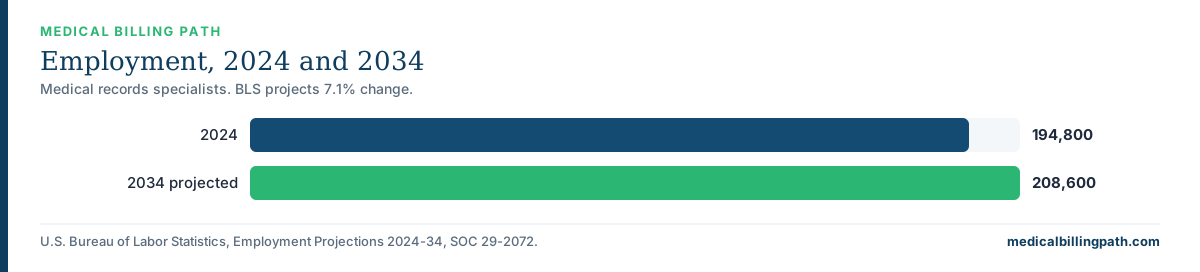
View the data behind this chart
| Year | Employment |
|---|---|
| 2024 | $194,800 |
| 2034 projected | $208,600 |
The BLS numbers
| Measure | Value |
|---|---|
| Employment, 2024 | 194,800 |
| Projected employment, 2034 | 208,600 |
| Change | 7.1 percent |
| Projected annual openings | 14,200 |
Source: BLS Employment Projections 2024-34, SOC 29-2072. Pay for the same occupation is on the salary page (OEWS May 2025).
What “about as fast as average” means if you are 34
It means clinics will keep generating claims. It does not mean a manager will skip the CPC because they are desperate. If you are leaving a shrinking retail schedule, average growth plus turnover is a sturdier story than an ad that says employers cannot find anyone. They are hiring people who can pass an exam and hit an accuracy target.
If you have kids and you can only work clinic hours, that actually matches how a lot of this work is scheduled. If you can only work from the kitchen table in year one, the national opening number will not rewrite the postings. Read remote medical coding jobs.
What drives demand
- An aging population uses more medical services, each generating claims that must be coded and billed.
- Every reimbursement model, including value-based arrangements, depends on accurate coded data.
- Regulatory and payer scrutiny raises the value of audit-ready coding.
Those forces support the projection. They do not tell you which clinic on your street is hiring next month.
What could slow it
- Computer-assisted coding and automation of routine claims shift entry-level work toward review and exceptions. See will AI replace medical coding.
- Consolidation of practices into larger systems centralizes billing departments. A town can lose three small-practice seats and gain one system job an hour away.
BLS still published growth through 2034 with those forces already in the market.
Openings are not the same as beginner remote jobs
14,200 a year sounds large until you notice most of it is replacement, and the postings that are easy to apply to from a couch are the ones that want one to three years. The first job is more often on site, in a practice, outpatient center, or billing company. See entry-level jobs.
A projection is a national model
Your town may have three clinics and a billing company, or a health system that only hires CCS-level staff. After this table:
- Open your state salary and employment page.
- Search local postings for CPC, CCA, CBCS, and medical biller.
- Count how many require experience you do not have yet.
If you cannot find postings, the national figure is not a local guarantee.
Growth does not skip CPC-A or the first on-site year
Hold a recognized credential. Take the first job that lets you document production work. Plan remote as a later move unless a posting clearly trains new people from home. That is how you use a BLS table without treating it as a promise.
Frequently asked questions
Is medical coding a dying career because of automation?
Where do the annual openings come from?
Is 7.1 percent growth a lot?
Will there be jobs in my state?
Does growth mean I will get hired?
What could make the outlook worse?
See something out of date? Tell us and we will check the source and fix it. Material corrections are listed on the corrections log.