Medical Billing vs Medical Coding: The Difference, Explained (2026)
Key takeaway: Coding turns clinical documentation into standardized codes; billing turns those codes into paid claims. Coders live in the code sets and guidelines; billers live in payer rules, claim forms, and denials. Most programs teach both, small practices often combine them, and BLS counts both under one occupation with a median wage of $51,140 (May 2025).
You do not have to pick a lane yet. A combined certificate keeps both doors open. Your first job will still shove you toward one queue, and hospital coding is a different exam later.
Side by side
| Medical coding | Medical billing | |
|---|---|---|
| Core task | Assign ICD-10-CM, CPT, HCPCS (and ICD-10-PCS) codes from documentation | Build, submit, and follow up on claims; manage denials and patient balances |
| Main knowledge | Anatomy, terminology, coding guidelines | Payer rules, claim forms, the revenue cycle |
| Typical credentials | CPC, CCA, CCS | CPB, CBCS (CPC often accepted) |
| Measured by | Charts per hour, audit accuracy | Days in accounts receivable, denial rate, collections |
| Where it leads | Specialty coding, auditing, compliance, education | Revenue cycle analysis, practice management |
How they connect
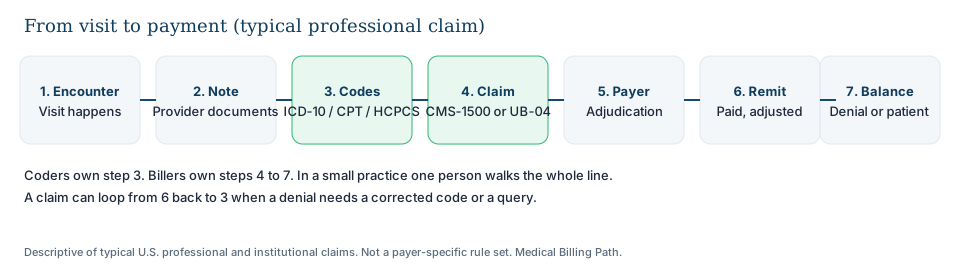
The coder’s output is the biller’s input. A wrong code produces a denial the biller has to work; a payer rule the biller knows can change how the coder documents a query. That is why combined programs exist and why the CBCS tests both.
Which one fits you
- You enjoy puzzles with rules, reading, and precision: coding.
- You enjoy process, persistence, and working with payers and patients: billing.
- You are not sure: a combined program keeps both open, and the first job often decides.
Coming from a front desk: you have already done eligibility. Billing will feel like a promotion of that work. Coming from a CNA job: coding will use the clinical language you already hear, without the lifting.
The first job specializes you
In a two-physician office you will do both, whatever the certificate says. In a health system you will do one, and the other department will email you when you get it wrong. Pick the program by the exam local employers name, then let the first job specialize you. Which certification is the next read.
Frequently asked questions
Which pays more, medical billing or medical coding?
Can one person do both billing and coding?
Which is easier to learn?
Which certification goes with which job?
Should I pick billing if I want to work from home faster?
I like patients. Which should I pick?
See something out of date? Tell us and we will check the source and fix it. Material corrections are listed on the corrections log.