Medical Billing and Coding Schools in District of Columbia (2026)
Advertising disclosure: listings marked "Sponsored Listings" are paid placements. See how we make money.
Key takeaway: District of Columbia has 0 institutions that reported completions in a medical billing, coding, or health information program to the U.S. Department of Education, and medical records specialists in the state earned a median of $72,040 per year in May 2025 according to BLS. No state license is required for billing or coding work; employers hire on completed training plus an industry certification.
If you need to study after bedtime or you might move, look at fully online certificates that map to a national exam (CPC, CCA, or CBCS) as well as the District of Columbia campuses below. The first job is often on site, starting pay sits near the lower percentiles, and the tuition on each card is the institution’s IPEDS sticker price, not the program price.
Medical billing and coding programs in District of Columbia run from short certificates (often under a year) to two-year associate degrees in health information technology. The school list below comes from federal IPEDS data and is ordered by our independent BOC Score where enough data exists. Partner listings appear in the program finder and carry Esy’s own sponsored label.
How to compare District of Columbia programs
- Accreditation. Confirm the school holds institutional accreditation you can verify in the Department of Education database. For health information technology associate degrees, CAHIIM program accreditation is what makes graduates eligible for AHIMA’s RHIT exam.
- Certification prep. Ask which exam the program typically prepares you for. Most entry-level postings name the CPC, CCA, or CBCS. Our certification guide explains the differences. This site is not affiliated with AAPC, AHIMA, or NHA.
- Format. Fully online, hybrid, or on campus. Some programs require a supervised practicum; find out whether it can be completed where you live and who finds the site.
- Total published cost. Compare the published price of the whole program including books. The tuition figures on the cards below are institution-wide sticker prices from IPEDS, not program prices. We do not quote exam fees.
- What the school reports. Every card links to the school’s IPEDS record so you can check enrollment, graduation rate, and program completions yourself.
A script for an admissions call: “I live in District of Columbia and I am comparing programs that map to the CPC or CCA. What is the total published cost including manuals, is the practicum remote, and how many graduates sat for the exam last year?”
Medical records specialist pay in District of Columbia
The U.S. Bureau of Labor Statistics reports the following for medical records specialists (SOC 29-2072) in District of Columbia, the occupation that covers most billing and coding roles. Figures are from the May 2025 Occupational Employment and Wage Statistics survey and describe workers already in the field, not program graduates.
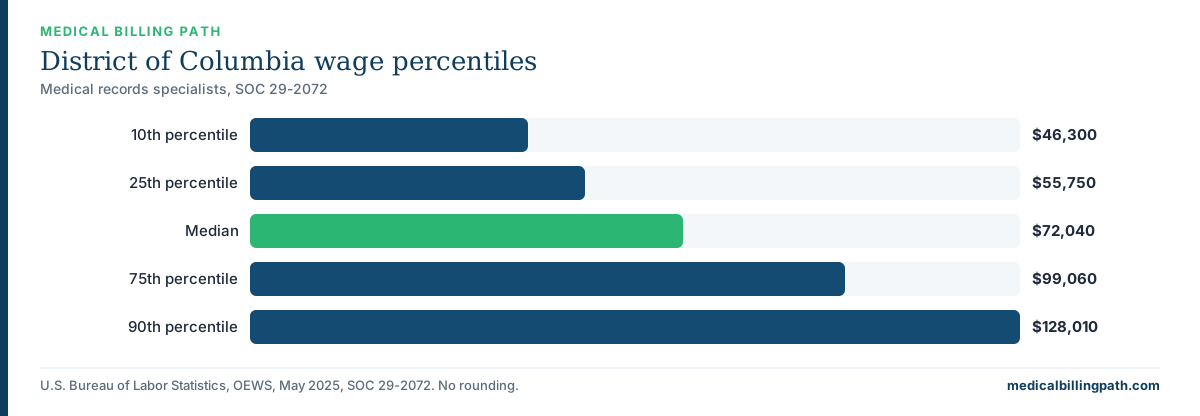
View the data behind this chart
| Percentile | Annual wage |
|---|---|
| 10th percentile | $46,300 |
| 25th percentile | $55,750 |
| Median | $72,040 |
| 75th percentile | $99,060 |
| 90th percentile | $128,010 |
| Measure | District of Columbia | United States |
|---|---|---|
| Median annual wage | $72,040 | $51,140 |
| Mean annual wage | $80,250 | $56,790 |
| 10th percentile | $46,300 | $37,000 |
| 25th percentile | $55,750 | $43,490 |
| 75th percentile | $99,060 | $64,820 |
| 90th percentile | $128,010 | $81,150 |
| Employment | 270 | 194,720 |
| Jobs per 1,000 workers | 0.381 | 1.2523 |
Source: U.S. Bureau of Labor Statistics, OEWS, May 2025, state estimates for SOC 29-2072. Location quotient 0.3 (1.0 = the national share of employment). Metro tables for this state: District of Columbia salary and metros. Download the CSV.
Schools with billing, coding, or health information programs in District of Columbia
No institution in District of Columbia reported completions in the CIP 51.07 program family in the most recent IPEDS data. Online programs from schools in other states may be available; use the program finder above.